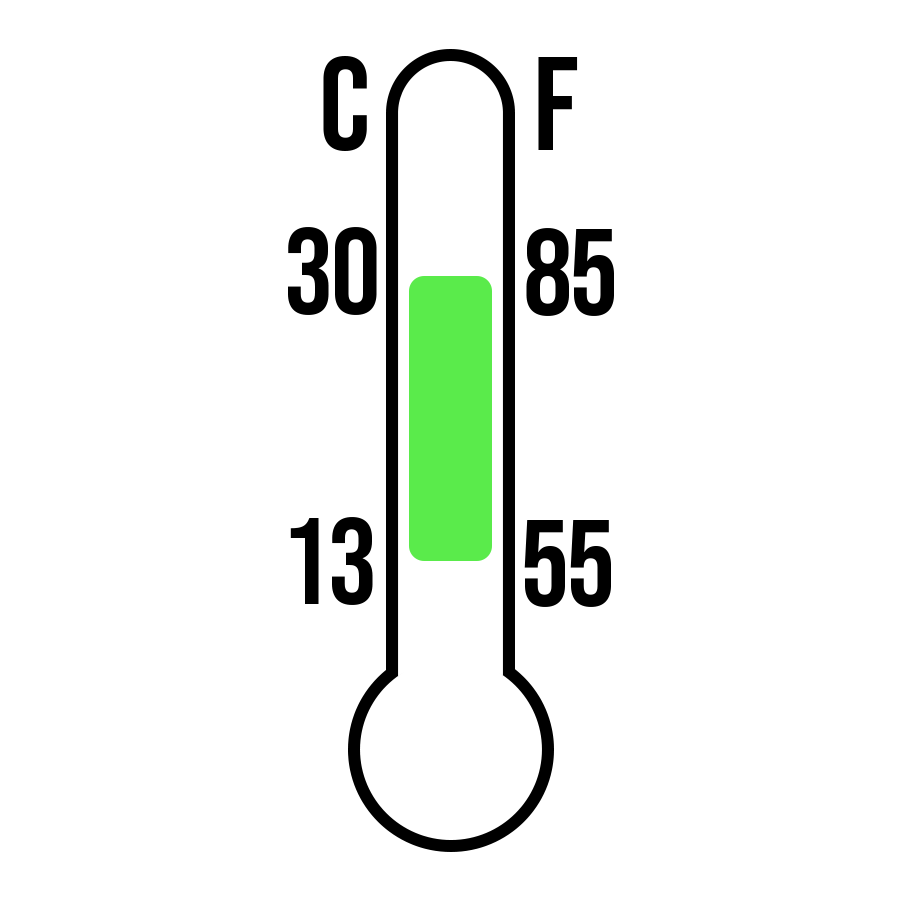
The vast majority of scientists looking at the data are convinced that humankind is facing a global warming crisis and that by reducing its carbon foot print, humankind can combat global warming. Even if you are not personally convinced these scientists are correct, the prudent course of action is for humankind to drastically reduce its carbon footprint while research continues to refine climate science.
This page provides links to a small bit of the many available discussions of global warming. The links are grouped into the following categories. Click on a category name to be taken to that category (This feature is currently not working.)
- History of Atmospheric CO2
- Importance of Individual Action
- Urgency
- Temperature
- Sea Level
- Overview
- Greenhouse Gases
- Air Conditioning
- Electric Vehicles
- Food
- Electricity
- Geothermal
- Nuclear
- Hydrogen
- Wildlife
—
History of Atmospheric CO2
![This graph, based on the comparison of atmospheric samples contained in ice cores and more recent direct measurements, provides evidence that atmospheric CO2 has increased since the Industrial Revolution. (Source: [[LINK||http://www.ncdc.noaa.gov/paleo/icecore/||NOAA]])](https://climate.nasa.gov/system/content_pages/main_images/203_co2-graph-061219.jpg)
https://climate.nasa.gov/evidence/ NASA reports atmospheric CO2 levels are higher than any time in the past 800,000 years. This report is based on samples of the atmosphere trapped in ice cores. Ice cores are not available further back that 800,000 years.
Carbon dioxide levels now higher than at any time in past 3.6 million years | Earth | EarthSky Using CO2 level estimation techniques that can go further back that the 800,000 year ice core techniques, NOAA reports atmospheric CO2 levels are higher than any time in the past 3.6 million years. At that time, sea levels were about 78 feet higher than today, and average temperatures were about 4°C (7°F) higher than in preindustrial times. March 2021: 417 ppm. 1750-1800: 417/1.5=278ppm.
—
Importance of Individual Action
https://www.unep.org/resources/emissions-gap-report-2021 The UN Emissions Gap Report 2021 shows that new national climate pledges combined with other mitigation measures put the world on track for a global temperature rise of 2.7°C by the end of the century. The many planned long-term solutions are crucial, but insufficient on their own to achieve sufficient prompt reduction of green house gases. The planet desperately needs consumers – you and others – to promptly and significantly reduce your green house gas emissions via Less Now, More Later, including GreenBetween. Be part of the desperately needed solution – less heating, less cooling, less driving, less flying, less meat-eating, and less procreation (2 children max). Otherwise, face the facts – you will be part of the problem – you will be leaving a tragic legacy of planet destruction.
https://www.cnn.com/videos/world/2019/09/23/jonathan-safran-foer-climate-crisis-diet-food.cnn Christiane Amanpour interviews Johnathan Safran Foer, author of We Are The Weather: Saving the Planet Begins At Breakfast. Jonathan focuses on the importance of individual action. Eat less meat. Drive less. Fly less. Have fewer babies. (Yes, Jonathan missed heat less and cool less. But then, as Jonathan points out, Al Gore, in his documentary An Inconvenient Truth, missed eat less meat.) “If we can imagine ourselves, you know, if we can imagine future generations looking back at us not, they are not going to say what did they feel? They are going to say what did they do?” Did they promptly adopt a low-carbon-footprint personal lifestyle, or did they continue with a high-carbon-footprint lifestyle? “Politicians enacted legislation that people want to have passed. The best way to show we want to change is to be the change ourselves.” Lead others – individuals, organizations, corporations, governments – in reducing carbon footprint by reducing your personal carbon footprint.
https://www.researchgate.net/publication/342360519_Jonathan_Safron_Foer_We_Are_The_Weather_Saving_The_Planet_Begins_At_Breakfast_London_Random_House_2019_ISBN_978-0-241-40595-6 A detailed review of We Are The Weather: Saving the Planet Begins At Breakfast.
https://www.theguardian.com/books/2019/oct/06/jonathan-safran-foer-we-are-the-weather-saving-planet-begins-breakfast-review A review of We Are The Weather: Saving the Planet Begins At Breakfast, with focus on eat less meat.
https://lloydalter.substack.com/p/now-available-for-pre-order Lloyd Alter’s book (published 2021-09-14) on the importance of individual action in battle against global warming.
https://lloydalter.substack.com/p/why-we-all-have-to-live-a-15-degree A brief version of Lloyd Alter’s plea for individual action in the battle against global warming.
—
Urgency
https://www.cbsnews.com/video/engine-trouble-how-greenhouse-gases-threaten-our-world/?ftag=CNM-00-10aab4i#x. (There will be an advertisement before climate animation begins.) An animation of the need to promptly reduce greenhouse gas emissions to avoid tipping points that might lead to ocean level rises of over 50 feet this century. Meeting this need means Less Now, More Later, including GreenBetween – less heating and cooling (none between 55°F/13°C and 85°F/30°C), less driving, less flying, less meat-eating, and less procreation (2 children max).
https://phys.org/news/2021-10-climate-scientists.html A somewhat detailed article on tipping points. Prompt and significant reduction of carbon footprint by consumers is needed to avoid these tipping points.
https://climaterealityproject.org/blog/how-feedback-loops-are-making-climate-crisis-worse The risk of global warming positive feedback cycles necessitates immediate short-term reductions in carbon footprint while we work on the long-term reductions in carbon footprint.
https://www.yahoo.com/news/antarctica-headed-climate-tipping-point-201226407.html Antarctica is headed for a climate tipping point by 2060, with catastrophic melting if carbon emissions aren’t cut quickly.
https://www.yahoo.com/news/climate-change-will-be-disastrous-even-after-latest-world-pledges-report-finds-182358643.html and https://climateactiontracker.org/publications/global-update-climate-summit-momentum/ Grim 2021 update that climate change will be disastrous even after the latest world pledges.
https://www.yahoo.com/news/virtually-impossible-australian-scientists-sound-124426815.html A grim assessment of progress toward goals for limiting global warming. GreenBetween and Less Now, More Later are clearly needed to reduce the near-term risks.
https://thebulletin.org/2020/04/best-path-to-net-zero-cut-short-lived-super-pollutants/ Short term carbon footprint reduction is crucial to preventing runaway global warming. Long term, e.g. 2060, reduction is insufficient. GreenBetween fits the need for immediate reduction.
https://www.zmescience.com/ecology/record-heatwave-in-siberia-reveals-surge-in-methane-emissions/?goal=0_3b5aad2288-551dd2c0a8-242868302 and https://www.pnas.org/content/118/32/e2107632118 August 2021 publication of new concern about yet another possible positive feedback cycle – methane released from rocks in Siberia. Less Now, More Later, including GreenBetween, are needed to promptly reduce carbon footprint.
—
Temperature
https://www.pnas.org/content/117/21/11350 By 2070, 19% of the global land and 1/3 of the global population will be experiencing MAT (mean annual temperature) >29 °C, currently experienced by only 0.8% of the global land. “Absent climate mitigation or human migration, … Compared with the preindustrial situation … the mean human-experienced temperature rise by 2070 will amount to an estimated 7.5 °C, about 2.3 times the mean global temperature rise, a discrepancy that is largely due to the fact that the land will warm much faster than the oceans …, but also amplified somewhat by the fact that population growth is projected to be predominantly in hotter places … . … in the absence of migration, one third of the global population … 3.5 billion people will be exposed to MAT ≥29.0 °C, a situation found in the present climate only in 0.8% of the global land surface, mostly concentrated in the Sahara, but in 2070 projected to cover 19% of the global land… “
https://www.yahoo.com/news/noaas-normal-climate-report-anything-215523606.html and https://www.ncei.noaa.gov/products/us-climate-normals?ftag=YHF4eb9d17. 2021 10-year update of NOAA’s U.S. Climate Normals. “This data update is a moment to pause and take a look at the bigger picture, that we are warming almost everywhere and there is nothing normal about it.”
Atlantic Ocean circulation weakens, sparking climate worries (yahoo.com) With increasing global warming comes increasing changes in Atlantic Ocean circulation, potentially irreversible, that contribute to extreme weather events and to enhanced sea level rise along the US east coast.
—
Sea Level
https://www.yahoo.com/news/sea-level-rise-climate-change-132106400.html and Twenty-first century sea-level rise could exceed IPCC projections for strong-warming futures: One Earth (cell.com) Some of the most well known glaciologists and sea-level rise experts published a paper expressing concern that accepted projections for rising sea level are understated. When CBS News asked John Englander what he thinks is a “realistic range” of sea-level rise by 2100, he said, “With the current global temperature level and rate of temperature increase I believe that we could get 5 to 10 feet before the end of this century.”
https://www.yahoo.com/news/satellites-show-worlds-glaciers-melting-150116879.html It’s becoming increasingly clear that sea level rise is going to be a bigger and bigger problem as we move through the 21st century,”
https://www.theguardian.com/environment/2019/dec/10/greenland-ice-sheet-melting-seven-times-faster-than-in-1990s The Greenland ice sheet is melting seven times faster than in the 1990s. Researchers are now forecasting sea levels could rise 67 centimeters by 2100.
—
Overview
https://css.umich.edu/factsheets/carbon-footprint-factsheet A breakdown of the carbon footprint. “Residential space heating and cooling are estimated to account for 44% of energy in U.S. homes in 2020.” Go GreenBetween and significantly reduce this 44%.
Facts and opinions about climate change An excellent overview of the global warming crisis. The overview is presented both as a 45 minute video and as essentially a transcript of the video.
Is mankind warming the Earth? An overview of global warming published in 1978. Discusses the complex interactions that contribute to global warming.
Contending with climate change: the next 25 years Discusses the challenges faced in battling global warming, for example in the transition to low-carbon energy sources or in solar geoengineering. Also quantifies the distribution of humankind’s carbon footprint. Low emitters are just over half of the world’s individuals, and they account, in total, for about one-tenth of the world’s emissions. Most of them live in villages in South Asia and Africa. The middle group, emitting between 2 and 10 tons per year are one-third of the world’s people, responsible for one-third of the emissions. High emitters are about one-sixth of the world’s people. This club is currently responsible for a little more than half of global emissions.
https://www.unenvironment.org/resources/emissions-gap-report-2019 The UN 2019 Emissions Gap Report. The world is headed for a 3.2C temperature rise by 2100.
https://news.yahoo.com/warming-toll-1-degree-hotter-100515511.html?hl=1&noRedirect=1 Miscellaneous global warming facts.
—
Greenhouse Gases
https://www.ecocivilization.info/three-tons-carbon-dioxide-per-person-per-year.html Three tons of carbon dioxide emissions per person per year would be sustainable – the emissions would be absorbed by the planet keeping the amount of carbon dioxide in the atmosphere level. The global average carbon dioxide emissions is now 4.5 tons carbon dioxide per person per year. Humankind desperately needs to reduce that 4.5 tons per year to the sustainable 3 tons per year. Are more than 3 tons per year of emissions attributable to you, and if so, what are you doing to reduce those emissions to the 3 tons per year sustainable level? Look immediately below on this page to find the average carbon dioxide emissions per person per year by country.
https://en.wikipedia.org/wiki/List_of_countries_by_carbon_dioxide_emissions_per_capita Annual Carbon Dioxide Emissions per Capita. There is a huge disparity between countries. There is a table with a 2018 column showing a range of 58.0 to 0.0 tonnes annual carbon dioxide emissions per capita for all human activities leading to climate relevant emissions, except biomass/biofuel combustion (short-cycle carbon). There is a 2016 graph showing a range of 20.87 to 0.95 tonnes annual carbon dioxide emissions per capita for fuel combustion. The graph is ordered in descending value by region, providing a easy overview.
https://www.epa.gov/climate-indicators/climate-change-indicators-atmospheric-concentrations-greenhouse-gases Just like CO2, some of the other atmospheric greenhouse gases are soaring above millennia-old levels.
https://earth.org/data_visualization/a-brief-history-of-co2/ A 4.5 Billion-Year History of CO2 in our Atmosphere
https://www.esrl.noaa.gov/gmd/ccgg/trends/global.html Current atmospheric CO2 concentration peak is about 413 ppm.
https://www.epa.gov/ghgemissions/overview-greenhouse-gases The lifetime in atmosphere and global warming potential vary greatly among the various greenhouse gases. Some of the CO2 will remain in the atmosphere for thousands of years.
—
Air Conditioning
https://connect.ieee.org/CP400v0G30IG0Uak3R0wH00 Air-conditioning is a major and rapidly growing component of humankind’s carbon footprint – a major and rapidly growing contributor to global warming – threatening to get much worse in the future if current trends continue. Go back about 100 years and air-conditioning was very rarely used. Until recently humankind lived without air-conditioning. We can live limiting our use of air-condition to not cooling below 30°C/85°F, and in the process have hope of achieving a sustainable personal carbon footprint of 3 tons/person/year. I suspect a somewhat similar, but less dramatic, story exists for heating.
—
Electric Vehicles
1 in 5 electric vehicle owners in California switched back to gas because charging their cars is a hassle, research shows (yahoo.com) For many folks, owning an electric vehicle will not be convenient until there is a significant improvement in the infrastructure for charging electric vehicles. “…an hour plugged into a household outlet <Level 1 charging> gave Bloomberg automotive analyst Kevin Tynan just three miles of range…”. “…Roughly one in five plug-in electric vehicle (PEV) owners switched back to owning gas-powered cars… 70% lacked access to Level 2 charging at home, and slightly fewer than that lacked Level 2 connections at their workplace…”
—
Food
From burgers to chocolate to beer: How climate change will affect what we eat (yahoo.com) The impacts will be more severe with increased global warming.
—
Electricity
https://www.ted.com/talks/solomon_goldstein_rose_how_much_clean_electricity_do_we_really_need To conquer global warming, the planet is going to need about 12 times the amount of clean electricity we generate today. This is going to take a lot of money and a lot of time. Less Now, More Later,, including GreenBetween, are essential for prompt and significant reduction of carbon footprint bridging the gap while we work on producing sufficient green electricity.
https://www.forbes.com/sites/robertbryce/2021/10/13/europes-energy-crisis-underscores-the-dangers-of-the-proposed-clean-electricity-performance-program/?sh=269e8021473a There was less wind, generating less green electricity, causing energy prices to soar. Switching over to green energy sources is essential. However, until there are sufficient green energy sources and the electricity infrastructure is upgraded to reliably manage the intermittent nature of many of the green energy sources, conservation of the green energy is essential to limit the electrical load. Less Now, More Later.
https://insideclimatenews.org/news/07102021/inside-clean-energy-drought-hydroelectric-power/?utm_source=InsideClimate+News&utm_campaign=9256feabcb-&utm_medium=email&utm_term=0_29c928ffb5-9256feabcb-328655166 Hydroelectric power is a key green energy source, but global warming climate effects are reducing the availability of hydroelectric power.
https://washingtonstatewire.com/keeping-the-lights-on-as-we-transition-to-a-clean-energy-future-lessons-from-california/ There are many difficult challenges to overcome along the road to all electricity being green. It’s gong to be a long journey. Less Now, More Later, including GreenBetween, are essential for prompt and significant reduction of carbon footprint bridging the gap while we work on achieving all electricity being green.
—
Geothermal
https://www.ted.com/talks/jamie_c_beard_the_untapped_energy_source_that_could_power_the_planet Recent progress in technology/infrastructure for geothermal energy plants that can be located “anywhere”, with no requirement for scarce unique geothermal features. Until sufficiently implemented, the planet desperately needs Less Now, More Later, including GreenBetween
—
Nuclear
Let’s Put Cheap, Portable Nuclear Reactors onto Barges – IEEE Spectrum Claim for affordable and safe nuclear power by 2025.
—
Hydrogen
https://finance.yahoo.com/news/germany-moves-hydrogen-lessons-opec-050021172.html Insight into developing the infrastructure needed to produce sufficient hydrogen to displace the carbon-based fuels.
https://spectrum.ieee.org/energy/environment/a-retired-jpl-engineers-journey-from-space-probes-to-carbonneutral-farming Insight into hydrogen as a key element in reducing the carbon footprint of agriculture.
—
Wildlife
A painful skin disease is killing dolphins worldwide — scientists just found out why (yahoo.com) Dolphin deaths traced to global warming.
https://www.theguardian.com/books/2019/oct/06/jonathan-safran-foer-we-are-the-weather-saving-planet-begins-breakfast-review A review of We Are The Weather: Saving the Planet Begins At Breakfast, with focus on eat less meat.
https://lloydalter.substack.com/p/now-available-for-pre-order Lloyd Alter’s book (published 2021-09-14) on the importance of individual action in battle against global warming.
https://lloydalter.substack.com/p/why-we-all-have-to-live-a-15-degree A brief version of Lloyd Alter’s plea for individual action in the battle against global warming.
—
Urgency
https://www.cbsnews.com/video/engine-trouble-how-greenhouse-gases-threaten-our-world/?ftag=CNM-00-10aab4i#x. (There will be an advertisement before climate animation begins.) An animation of the need to promptly reduce greenhouse gas emissions to avoid tipping points that might lead to ocean level rises of over 50 feet this century. Meeting this need means Less Now, More Later, including GreenBetween – less heating and cooling (none between 55°F/13°C and 85°F/30°C), less driving, less flying, less meat-eating, and less procreation (2 children max).
https://phys.org/news/2021-10-climate-scientists.html A somewhat detailed article on tipping points. Prompt and significant reduction of carbon footprint by consumers is needed to avoid these tipping points.
https://climaterealityproject.org/blog/how-feedback-loops-are-making-climate-crisis-worse The risk of global warming positive feedback cycles necessitates immediate short-term reductions in carbon footprint while we work on the long-term reductions in carbon footprint.
https://www.yahoo.com/news/antarctica-headed-climate-tipping-point-201226407.html Antarctica is headed for a climate tipping point by 2060, with catastrophic melting if carbon emissions aren’t cut quickly.
https://www.yahoo.com/news/climate-change-will-be-disastrous-even-after-latest-world-pledges-report-finds-182358643.html and https://climateactiontracker.org/publications/global-update-climate-summit-momentum/ Grim 2021 update that climate change will be disastrous even after the latest world pledges.
https://www.yahoo.com/news/virtually-impossible-australian-scientists-sound-124426815.html A grim assessment of progress toward goals for limiting global warming. GreenBetween and Less Now, More Later are clearly needed to reduce the near-term risks.
https://thebulletin.org/2020/04/best-path-to-net-zero-cut-short-lived-super-pollutants/ Short term carbon footprint reduction is crucial to preventing runaway global warming. Long term, e.g. 2060, reduction is insufficient. GreenBetween fits the need for immediate reduction.
https://www.zmescience.com/ecology/record-heatwave-in-siberia-reveals-surge-in-methane-emissions/?goal=0_3b5aad2288-551dd2c0a8-242868302 and https://www.pnas.org/content/118/32/e2107632118 August 2021 publication of new concern about yet another possible positive feedback cycle – methane released from rocks in Siberia. Less Now, More Later, including GreenBetween, are needed to promptly reduce carbon footprint.
—
Temperature
https://www.pnas.org/content/117/21/11350 By 2070, 19% of the global land and 1/3 of the global population will be experiencing MAT (mean annual temperature) >29 °C, currently experienced by only 0.8% of the global land. “Absent climate mitigation or human migration, … Compared with the preindustrial situation … the mean human-experienced temperature rise by 2070 will amount to an estimated 7.5 °C, about 2.3 times the mean global temperature rise, a discrepancy that is largely due to the fact that the land will warm much faster than the oceans …, but also amplified somewhat by the fact that population growth is projected to be predominantly in hotter places … . … in the absence of migration, one third of the global population … 3.5 billion people will be exposed to MAT ≥29.0 °C, a situation found in the present climate only in 0.8% of the global land surface, mostly concentrated in the Sahara, but in 2070 projected to cover 19% of the global land… “
https://www.yahoo.com/news/noaas-normal-climate-report-anything-215523606.html and https://www.ncei.noaa.gov/products/us-climate-normals?ftag=YHF4eb9d17. 2021 10-year update of NOAA’s U.S. Climate Normals. “This data update is a moment to pause and take a look at the bigger picture, that we are warming almost everywhere and there is nothing normal about it.”
Atlantic Ocean circulation weakens, sparking climate worries (yahoo.com) With increasing global warming comes increasing changes in Atlantic Ocean circulation, potentially irreversible, that contribute to extreme weather events and to enhanced sea level rise along the US east coast.
—
Sea Level
https://www.yahoo.com/news/sea-level-rise-climate-change-132106400.html and Twenty-first century sea-level rise could exceed IPCC projections for strong-warming futures: One Earth (cell.com) Some of the most well known glaciologists and sea-level rise experts published a paper expressing concern that accepted projections for rising sea level are understated. When CBS News asked John Englander what he thinks is a “realistic range” of sea-level rise by 2100, he said, “With the current global temperature level and rate of temperature increase I believe that we could get 5 to 10 feet before the end of this century.”
https://www.yahoo.com/news/satellites-show-worlds-glaciers-melting-150116879.html It’s becoming increasingly clear that sea level rise is going to be a bigger and bigger problem as we move through the 21st century,”
https://www.theguardian.com/environment/2019/dec/10/greenland-ice-sheet-melting-seven-times-faster-than-in-1990s The Greenland ice sheet is melting seven times faster than in the 1990s. Researchers are now forecasting sea levels could rise 67 centimeters by 2100.
—
Overview
https://css.umich.edu/factsheets/carbon-footprint-factsheet A breakdown of the carbon footprint. “Residential space heating and cooling are estimated to account for 44% of energy in U.S. homes in 2020.” Go GreenBetween and significantly reduce this 44%.
Facts and opinions about climate change An excellent overview of the global warming crisis. The overview is presented both as a 45 minute video and as essentially a transcript of the video.
Is mankind warming the Earth? An overview of global warming published in 1978. Discusses the complex interactions that contribute to global warming.
Contending with climate change: the next 25 years Discusses the challenges faced in battling global warming, for example in the transition to low-carbon energy sources or in solar geoengineering. Also quantifies the distribution of humankind’s carbon footprint. Low emitters are just over half of the world’s individuals, and they account, in total, for about one-tenth of the world’s emissions. Most of them live in villages in South Asia and Africa. The middle group, emitting between 2 and 10 tons per year are one-third of the world’s people, responsible for one-third of the emissions. High emitters are about one-sixth of the world’s people. This club is currently responsible for a little more than half of global emissions.
https://www.unenvironment.org/resources/emissions-gap-report-2019 The UN 2019 Emissions Gap Report. The world is headed for a 3.2C temperature rise by 2100.
https://news.yahoo.com/warming-toll-1-degree-hotter-100515511.html?hl=1&noRedirect=1 Miscellaneous global warming facts.
—
Greenhouse Gases
https://www.ecocivilization.info/three-tons-carbon-dioxide-per-person-per-year.html Three tons of carbon dioxide emissions per person per year would be sustainable – the emissions would be absorbed by the planet keeping the amount of carbon dioxide in the atmosphere level. The global average carbon dioxide emissions is now 4.5 tons carbon dioxide per person per year. Humankind desperately needs to reduce that 4.5 tons per year to the sustainable 3 tons per year. Are more than 3 tons per year of emissions attributable to you, and if so, what are you doing to reduce those emissions to the 3 tons per year sustainable level? Look immediately below on this page to find the average carbon dioxide emissions per person per year by country.
https://en.wikipedia.org/wiki/List_of_countries_by_carbon_dioxide_emissions_per_capita Annual Carbon Dioxide Emissions per Capita. There is a huge disparity between countries. There is a table with a 2018 column showing a range of 58.0 to 0.0 tonnes annual carbon dioxide emissions per capita for all human activities leading to climate relevant emissions, except biomass/biofuel combustion (short-cycle carbon). There is a 2016 graph showing a range of 20.87 to 0.95 tonnes annual carbon dioxide emissions per capita for fuel combustion. The graph is ordered in descending value by region, providing a easy overview.
https://www.epa.gov/climate-indicators/climate-change-indicators-atmospheric-concentrations-greenhouse-gases Just like CO2, some of the other atmospheric greenhouse gases are soaring above millennia-old levels.
https://earth.org/data_visualization/a-brief-history-of-co2/ A 4.5 Billion-Year History of CO2 in our Atmosphere
https://www.esrl.noaa.gov/gmd/ccgg/trends/global.html Current atmospheric CO2 concentration peak is about 413 ppm.
https://www.epa.gov/ghgemissions/overview-greenhouse-gases The lifetime in atmosphere and global warming potential vary greatly among the various greenhouse gases. Some of the CO2 will remain in the atmosphere for thousands of years.
—
Air Conditioning
https://connect.ieee.org/CP400v0G30IG0Uak3R0wH00 Air-conditioning is a major and rapidly growing component of humankind’s carbon footprint – a major and rapidly growing contributor to global warming – threatening to get much worse in the future if current trends continue. Go back about 100 years and air-conditioning was very rarely used. Until recently humankind lived without air-conditioning. We can live limiting our use of air-condition to not cooling below 30°C/85°F, and in the process have hope of achieving a sustainable personal carbon footprint of 3 tons/person/year. I suspect a somewhat similar, but less dramatic, story exists for heating.
—
Electric Vehicles
1 in 5 electric vehicle owners in California switched back to gas because charging their cars is a hassle, research shows (yahoo.com) For many folks, owning an electric vehicle will not be convenient until there is a significant improvement in the infrastructure for charging electric vehicles. “…an hour plugged into a household outlet <Level 1 charging> gave Bloomberg automotive analyst Kevin Tynan just three miles of range…”. “…Roughly one in five plug-in electric vehicle (PEV) owners switched back to owning gas-powered cars… 70% lacked access to Level 2 charging at home, and slightly fewer than that lacked Level 2 connections at their workplace…”
—
Food
From burgers to chocolate to beer: How climate change will affect what we eat (yahoo.com) The impacts will be more severe with increased global warming.
—
Electricity
https://www.ted.com/talks/solomon_goldstein_rose_how_much_clean_electricity_do_we_really_need To conquer global warming, the planet is going to need about 12 times the amount of clean electricity we generate today. This is going to take a lot of money and a lot of time. Less Now, More Later,, including GreenBetween, are essential for prompt and significant reduction of carbon footprint bridging the gap while we work on producing sufficient green electricity.
https://www.forbes.com/sites/robertbryce/2021/10/13/europes-energy-crisis-underscores-the-dangers-of-the-proposed-clean-electricity-performance-program/?sh=269e8021473a There was less wind, generating less green electricity, causing energy prices to soar. Switching over to green energy sources is essential. However, until there are sufficient green energy sources and the electricity infrastructure is upgraded to reliably manage the intermittent nature of many of the green energy sources, conservation of the green energy is essential to limit the electrical load. Less Now, More Later.
https://insideclimatenews.org/news/07102021/inside-clean-energy-drought-hydroelectric-power/?utm_source=InsideClimate+News&utm_campaign=9256feabcb-&utm_medium=email&utm_term=0_29c928ffb5-9256feabcb-328655166 Hydroelectric power is a key green energy source, but global warming climate effects are reducing the availability of hydroelectric power.
https://washingtonstatewire.com/keeping-the-lights-on-as-we-transition-to-a-clean-energy-future-lessons-from-california/ There are many difficult challenges to overcome along the road to all electricity being green. It’s gong to be a long journey. Less Now, More Later, including GreenBetween, are essential for prompt and significant reduction of carbon footprint bridging the gap while we work on achieving all electricity being green.
—
Geothermal
https://www.ted.com/talks/jamie_c_beard_the_untapped_energy_source_that_could_power_the_planet Recent progress in technology/infrastructure for geothermal energy plants that can be located “anywhere”, with no requirement for scarce unique geothermal features. Until sufficiently implemented, the planet desperately needs Less Now, More Later, including GreenBetween
—
Nuclear
Let’s Put Cheap, Portable Nuclear Reactors onto Barges – IEEE Spectrum Claim for affordable and safe nuclear power by 2025.
—
Hydrogen
https://finance.yahoo.com/news/germany-moves-hydrogen-lessons-opec-050021172.html Insight into developing the infrastructure needed to produce sufficient hydrogen to displace the carbon-based fuels.
https://spectrum.ieee.org/energy/environment/a-retired-jpl-engineers-journey-from-space-probes-to-carbonneutral-farming Insight into hydrogen as a key element in reducing the carbon footprint of agriculture.
—
Wildlife
A painful skin disease is killing dolphins worldwide — scientists just found out why (yahoo.com) Dolphin deaths traced to global warming.
 GreenBetween to Combat Global Warming